
Quick Answer
Zakat must be paid by every Muslim who owns wealth above the nisab threshold (87.48 grams of gold or 612.36 grams of silver, roughly $12,200 or $1,260 at September 2026 prices) for a full lunar year. It is 2.5% of qualifying net wealth. Eight categories of people are eligible to receive it, named in the Quran in Surah At-Tawbah (9:60): the poor, the needy, zakat administrators, those whose hearts are to be reconciled, those in bondage, the debt-ridden, those in the path of God, and stranded travellers. Your own dependents and anyone whose basic needs are met cannot receive your zakat.
Zakat is one of the Five Pillars of Islam, a mandatory act of worship and a financial obligation. Yet many Muslims are unsure about two things: who must pay it, and who is allowed to receive it. Getting either wrong matters, because zakat given to someone who does not qualify does not discharge the duty.
This guide answers both questions. You will learn the conditions that make zakat obligatory, which assets count, the eight groups who qualify to receive it, who is excluded, and how to check your own position. If you are new to the subject, start with our explainer on what Zakat is in Islam.
Table of Contents
What Are the Conditions That Make Zakat Obligatory?
Not every Muslim is required to pay zakat. The following conditions must be met together.
1. You must be Muslim. Zakat is an act of worship and applies only to Muslims.
2. You must own the wealth fully. The wealth must be yours, in your possession or control, and free of another person’s ownership claim. Money you hold on trust for someone else, or that is not yet in your hands, is not counted.
3. Your wealth must reach the nisab. The nisab is the minimum amount of wealth that triggers the obligation. It is fixed in metal, not in dollars, so its cash value changes with the market.
| Nisab benchmark | Classical measure | Weight | Approximate value, September 2026 (USD) |
| Gold | 20 dinars | 87.48 grams (some scholars use 85 g) | About $12,200 |
| Silver | 200 dirhams | 612.36 grams (some scholars use 595 g) | About $1,260 |
Values are based on spot prices of roughly $139 per gram for gold and $2.06 per gram for silver on 17 September 2026 and should be rechecked on the day you calculate. Scholars differ on which benchmark to apply. The Hanafi school and many contemporary scholars recommend the silver nisab because it brings more people into the obligation and therefore serves more of the poor; others use gold because silver’s value has fallen so far historically that the silver nisab is now very low. Our guide to the zakat nisab in US dollars explains how to choose and is updated each year.

4. One full lunar year (hawl) must pass. Zakat becomes due when your wealth has been at or above the nisab for one Islamic year, about 354 days. What happens if it dips below the nisab mid-year depends on the school: in the Hanafi view only the start and end of the year matter, so a temporary dip does not reset the clock; in the Shafi’i, Maliki and Hanbali view the year restarts from the point your wealth is again at the nisab. Note that the hawl condition does not apply to agricultural produce, which is due at harvest.
What about children and the mentally incapacitated? In the Hanafi school zakat is not due on the wealth of a minor or a person without legal capacity. In the Maliki, Shafi’i and Hanbali schools, which together form the majority position, zakat is due on their wealth and the guardian pays it on their behalf. Families following the majority view should include a child’s savings or gold in the household calculation.
If these conditions are met, zakat at 2.5% of qualifying net wealth is obligatory. Our step-by-step guide to how to calculate zakat walks through the arithmetic.
Which Assets Are Subject to Zakat?
Not all wealth is zakatable.
Zakatable assets include:
- Gold and silver, including bullion, coins and investment-grade jewellery. Personal-use jewellery is zakatable in the Hanafi school but exempt in the Maliki, Shafi’i and Hanbali schools when it is worn and not hoarded as wealth; follow your school or the ruling of a scholar you trust. See how to calculate zakat on gold.
- Cash, in hand or in bank accounts, in any currency
- Business inventory and trade goods, valued at current selling price
- Investments: shares, mutual funds, cryptocurrency, and cash held in investment accounts. Rental property itself is not zakatable, but the rental income saved from it is
- Money owed to you that you expect to recover
- Livestock kept for breeding and pasture, under the separate livestock rules
- Agricultural produce, at 5% or 10% depending on irrigation, due at harvest
Non-zakatable assets include:
- The home you live in
- Personal vehicles, furniture, clothing and household goods
- Tools, machinery and equipment used in your work
- Debts owed to you that are unlikely to be recovered (zakat is paid on these only if and when they are received)
Debts you owe that are due within the coming year may be deducted from your zakatable assets, so zakat is calculated on your net qualifying wealth. Long-term debts such as a mortgage are treated differently by different scholars; the common contemporary approach is to deduct only the instalments due in the coming twelve months.
Who Is Eligible to Receive Zakat? The Eight Categories
The Quran names eight categories of recipient in Surah At-Tawbah (9:60), and these categories are fixed: zakat may not be given to anyone outside them.

1. The poor (al-fuqara). Those who own little or nothing and cannot meet their basic needs.
2. The needy (al-masakin). Those who have some income or assets but not enough to cover their basic living expenses. Scholars debate which of the first two groups is worse off; in practice both receive zakat and the distinction rarely changes who qualifies.
3. Zakat administrators (al-’amilin ’alayha). Those appointed to collect, manage and distribute zakat, who may be paid from it for their work.
4. Those whose hearts are to be reconciled (al-mu’allafati qulubuhum). New Muslims who need support while their circumstances settle, and, in classical law, others whose goodwill benefits the Muslim community.
5. Those in bondage (fi’r-riqab). Historically, freeing enslaved people. Many contemporary scholars extend this to people trapped in bonded labour, debt slavery or trafficking.
6. The debt-ridden (al-gharimin). People who took on debt for legitimate needs, not extravagance or sin, and cannot repay it.
7. In the path of God (fi sabilillah). Classically understood as those serving the community’s defence without pay. Many contemporary scholars include Islamic education, da’wah and community welfare projects; others keep it narrow. Because of this disagreement, most zakat is given to the first two categories.
8. The stranded traveller (ibn as-sabil). Someone away from home who has run out of means to return, even if they are wealthy at home.
Do recipients have to be Muslim? The majority view is that zakat (as opposed to voluntary charity) is given to Muslims, with the “reconciled hearts” category as the exception some scholars allow. Sadaqah and other charity may be given to anyone in need.
Who Cannot Receive Zakat?
- Anyone who owns the nisab or whose basic needs are met. In the Hanafi school, a person who owns wealth at the nisab is not eligible; other schools use the test of sufficiency for themselves and their dependents.
- Your own dependents. A person may not give zakat to those they are already obliged to support: spouse, children, grandchildren, parents and grandparents. (The Shafi’i and Hanbali schools allow a wife to give zakat to her husband if he qualifies, since she is not obliged to maintain him.)
- The family of the Prophet (Banu Hashim). In the classical view they may not receive zakat, though many contemporary scholars allow it where they are poor and no other provision exists.
- Non-Muslims, other than the exception noted above; they may receive sadaqah.
- Projects rather than people, such as mosque construction or general operating costs, in the majority view, unless a scholar you follow classes them under fi sabilillah.
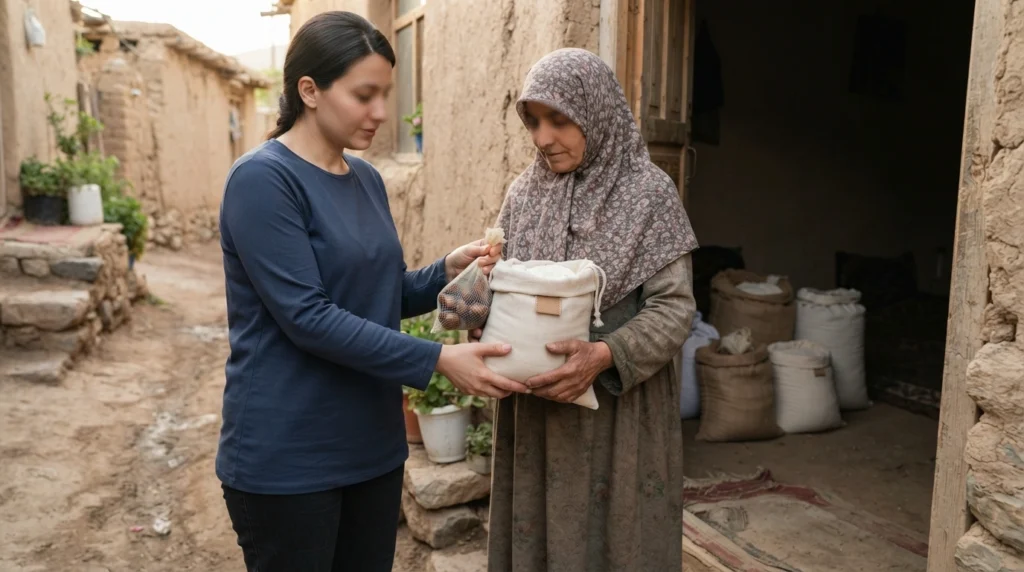
Zakat given to someone who does not qualify does not discharge the obligation, and the payment must be repeated. This is why giving through a trusted organization that verifies its beneficiaries matters. Darul Infaq distributes zakat to verified low-income families through its financial assistance, orphan support and educational assistance programs, and publishes its Form 990s and allocation policy so donors can see where funds go.
Can I Give Zakat to Relatives?
Yes, and it is encouraged. Relatives who qualify under one of the eight categories and whom you are not obliged to support (siblings, aunts and uncles, cousins, nieces and nephews, adult children who are independent, in-laws) may receive your zakat, and the Prophet (peace be upon him) taught that charity to a needy relative earns a double reward: the reward of charity and the reward of maintaining family ties. Confirm that the relative genuinely qualifies, and give without making them feel obliged.
What If You Are Unsure Whether You Owe Zakat?
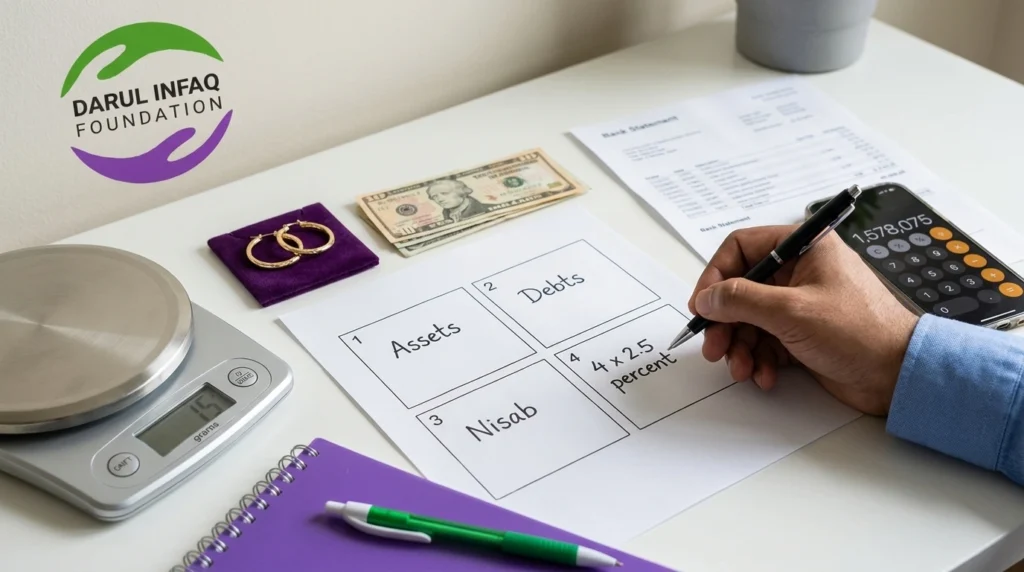
Work through it in four steps:
- Add up your zakatable assets on your zakat date: cash, gold and silver, investments, business stock and receivable debts.
- Subtract debts due within the year.
- Compare the result with the current nisab (gold or silver, whichever you follow).
- If your net wealth is at or above the nisab and a lunar year has passed, you owe 2.5% of it.
If you have never fixed a zakat date, our guide on when zakat is due explains how to set your zakat anniversary. For the rate itself and worked examples, see how much is zakat. When in doubt, consult a qualified scholar; the ruling on jewellery, children’s wealth and long-term debt varies by school and your circumstances. You can give your zakat through Darul Infaq’s Zakat-ul-Maal program, where it reaches verified eligible families.
Zakat vs Sadaqah
Zakat is obligatory, fixed at 2.5%, due once a year, and restricted to the eight categories. Sadaqah is voluntary charity with no fixed amount, no timing and no restriction on recipients. Sadaqah never replaces zakat, but zakat payers are encouraged to give sadaqah as well. Our post on the differences between Zakah and Sadaqah covers this in more depth, and the Wikipedia article on Zakat offers a neutral overview of the practice’s history and its place among the pillars.
Calculated your zakat on gold? Pay it where it reaches those who qualify.
Give Your Zakat Now →Frequently Asked Questions About Zakat Eligibility
Is zakat obligatory if my wealth fluctuates above and below the nisab during the year?
It depends on your school. In the Hanafi view, zakat is due if you were at or above the nisab at the start and the end of your zakat year; a dip in between does not matter. In the Shafi’i, Maliki and Hanbali view, dropping below the nisab resets the year. Either way, if you are above the nisab on your zakat date and were above it a lunar year earlier, pay.
Do I pay zakat on my children’s savings or gold?
In the Maliki, Shafi’i and Hanbali schools, yes: zakat is due on a minor’s wealth and the guardian pays it. In the Hanafi school it is not due until the child reaches maturity. Follow the school you adhere to.
Can I give zakat to my siblings or other relatives?
Yes, if they qualify under one of the eight categories and you are not obliged to support them. Giving to eligible relatives carries a double reward. You cannot give zakat to your spouse, children or parents, because you are already responsible for them.
Does zakat apply to retirement accounts such as a 401(k) or IRA?
Most contemporary scholars say yes, because the funds are owned by you. Common approaches are to pay 2.5% on the full vested balance each year, or on the amount you could withdraw after taxes and penalties, or to defer zakat on inaccessible funds until they are withdrawn and then pay for the years missed. Choose one approach with a scholar’s guidance and apply it consistently.
Can a zakat payer also receive zakat?
No. Someone who owns wealth at the nisab, or whose basic needs are met, is not eligible to receive zakat in the same period.
Is zakat the same as Sadaqah?
No. Zakat is obligatory, fixed at 2.5%, due annually and limited to eight categories of recipient. Sadaqah is voluntary, unlimited in amount and may be given to anyone.
Can zakat be used for mosque construction?
In the majority view, no: zakat is for people in the eight categories, not for buildings or general operating costs. Mosque construction is funded from sadaqah and waqf. Some contemporary scholars allow certain educational or da’wah projects under fi sabilillah; if you rely on that view, confirm with the scholar you follow.