| Quick answer Zakat is 2.5 percent of the wealth you have held for one lunar year, provided that wealth is above the nisab threshold. It is not 2.5 percent of your salary. So a person with $20,000 in savings, gold and investments on their zakat date owes $500, whatever they earned that year. The 2.5 percent rate is described in the hadith as a quarter of a tenth, and it applies to money, gold, silver, trade goods and most investments. Livestock, crops and found treasure use different rates. |
Ask most Muslims how much is zakat and they will say 2.5 percent without hesitating. Ask them 2.5 percent of what, and the confidence drops. Some say income. Some say savings. Some say everything they own including the house. Only one of those is right, and the wrong answers are not small errors: they can mean paying ten times too much or a fraction of what is owed. If you want the basics of zakat as a pillar before the numbers, that page covers the definition, who must pay and who may receive. This one is only about the amount.
The rate is the easy part. It has been 2.5 percent for fourteen centuries and no school of law disputes it. The base it is applied to, and the timing, are where the real questions sit. Keep in mind too that zakat and sadaqah are separate obligations. Zakat has a fixed rate and a fixed base. Sadaqah has neither. Mixing them up is the second most common reason people arrive at the wrong figure.
The Short Answer, and the Part Everyone Gets Wrong
Here is the rule in one line: zakat is 2.5 percent of your net zakatable wealth on your zakat anniversary, if that wealth is at or above nisab. Every word in that sentence is doing a job. The table shows what people assume, and what is actually true.
| What people assume | What is actually true |
| 2.5 percent of my annual income | 2.5 percent of wealth still in your possession after a lunar year. Income only matters to the extent you did not spend it. |
| 2.5 percent of everything I own | Only zakatable wealth. Your home, car, furniture, clothing and work tools are excluded regardless of value. |
| I pay it in Ramadan because that is when zakat is due | Zakat is due on your own anniversary, the day your wealth first passed nisab. Many people choose Ramadan for the reward, but the rate does not change with the month. |
| Below a certain amount you pay a smaller percentage | There are no bands. Below nisab you pay nothing. At or above nisab you pay 2.5 percent of the whole amount, not just the excess. |
| The charity I gave during the year counts toward it | Only money given with the specific intention of zakat counts. General sadaqah does not reduce your zakat. |
2.5 Percent of Savings, Not 2.5 Percent of Salary
This is the mistake that matters most, so it gets its own section. Zakat is a tax on retained wealth, not on earnings. The Quran and hadith set the obligation on the wealth a person holds, and the one year condition only makes sense for something that sits in your hands long enough to be held. A salary does not. It arrives and is spent. What is left of it on your zakat date is what zakat applies to.
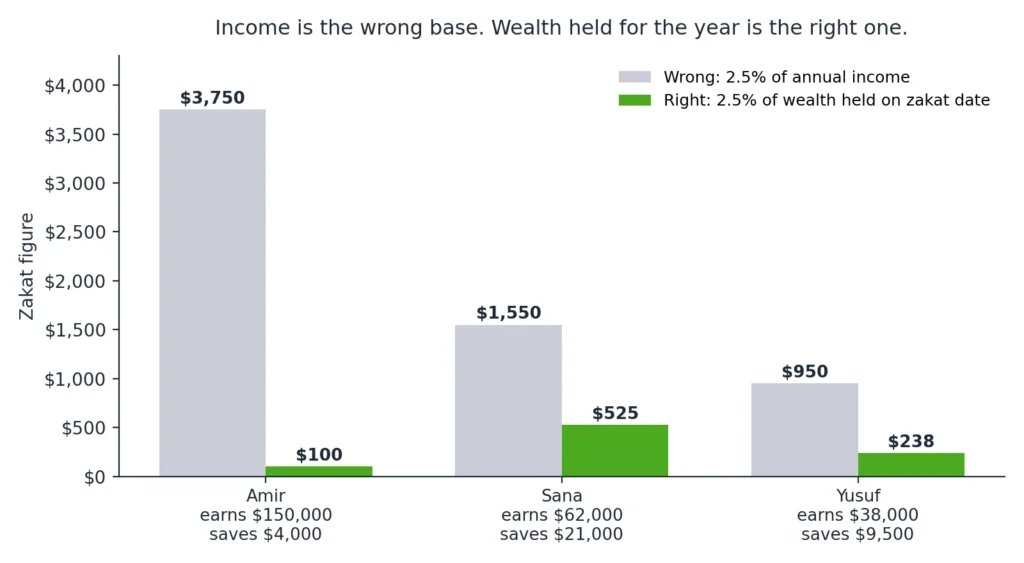
Figure 1. Three people, two methods. The income method produces figures that bear no relation to what anyone actually owes.
Look at Amir. He earns the most and would pay $3,750 if zakat were on income. He saves almost nothing, so his real zakat is $100. Sana earns far less but has $21,000 sitting in savings and a small gold set, so she owes $525. That is not unfair to Sana. It is the whole point: zakat circulates wealth that is being held, and leaves alone wealth that is already moving through the economy. If your figure is ready, you can pay it as Zakat ul Maal and it is ring fenced for eligible recipients.
Why the Rate Is One Quarter of a Tenth
The Prophet, peace be upon him, instructed that on silver and money the due is rub’ al ushr, a quarter of a tenth. A tenth is 10 percent. A quarter of that is 2.5 percent. Put another way, it is one part in forty: for every $40 of zakatable wealth, $1 is owed. That phrasing is worth remembering because it makes mental arithmetic easy. Divide your net zakatable wealth by 40 and you have your zakat.
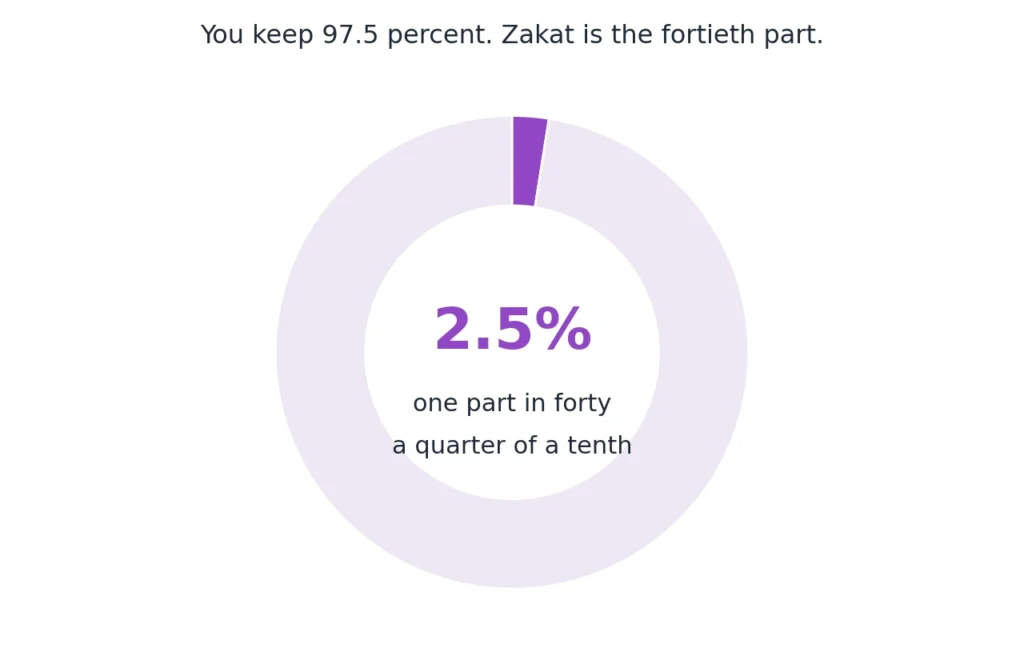
Figure 2. The rate as a proportion of what you hold.
The rate is deliberately low. It was set at a level that a person holding wealth for a full year can afford without it damaging their own position, and it was never meant to be adjusted upward by governments or charities. Anyone telling you the rate is higher than 2.5 percent for money, gold or investments is wrong. Anyone telling you it is lower is also wrong.
Three Quick Examples at Different Wealth Levels
All three use the silver nisab, which in August 2026 is roughly $1,370. Net zakatable wealth means cash, savings, gold, silver and investments held on the zakat date, minus debts that are due right now.
| Net zakatable wealth | Above nisab? | Zakat owed | What that amount does |
| $1,100 | No | $0 | Nothing is owed. This person may give sadaqah if they wish, but there is no obligation. |
| $8,400 | Yes | $210 | Roughly two months of grocery support for a family through our monthly programme. |
| $45,000 | Yes | $1,125 | A full school year of fees, uniforms and books for two children. |
| $180,000 | Yes | $4,500 | Emergency relief for several households after a flood or fire, or a year of groceries for three families. |
Notice the jump between the first and second rows. At $1,100 the answer is zero. At $1,400, just over nisab, the answer is $35 on the whole $1,400. There is no phase in. The figures in the last column are real programme costs, and you can see how zakat is allocated between educational assistance and emergency relief on the programme pages.
When the Rate Is Not 2.5 Percent
The 2.5 percent rate is for money and things treated like money. Islamic law sets different rates for other kinds of wealth, and one obligation that is not a percentage at all.
| Type of wealth | Rate | Notes |
| Cash, savings, gold, silver, shares, trade goods | 2.5 percent | The rate this article is about. Applies to nearly every household in the United States. |
| Crops watered by rain | 10 percent of the harvest | No cost of irrigation, so the higher rate. |
| Crops watered by irrigation | 5 percent of the harvest | Labour and expense reduce the rate. |
| Livestock | By head count, not percentage | Fixed schedules for camels, cattle and sheep once a minimum number is held. |
| Buried treasure and found minerals (rikaz) | 20 percent | Due immediately on discovery. No hawl. |
| Zakat al Fitr | Fixed amount per person | Not a percentage. Paid per household member before Eid prayer, regardless of wealth. |
The last row catches people out every Ramadan. Zakat al Fitr is a separate obligation with its own rule and its own deadline, and paying it does not reduce your 2.5 percent. If you are settling both in the same month, our fitrana page handles the per person payment separately so the two are not confused on your receipt.
What Happens If You Pay More Than You Owe
Two situations, two different answers. If you overpaid because you miscalculated, the majority position is that the excess counts as voluntary sadaqah. It is rewarded, but it does not carry forward as a credit against next year’s zakat. You cannot pay $1,000 this year when you owed $600 and then pay $200 next year when you owe $600 again. Each year stands alone.
If you deliberately paid in advance, with the intention at the time of payment that the money was next year’s zakat, the Hanafi and Shafi schools accept this as an advance payment, provided you already held nisab when you paid. The Maliki school does not. So if you want to prepay, say so clearly to yourself and to the charity, and keep the record. Vague generosity is sadaqah. Specific intention is zakat.
The reverse also holds. Underpaying does not get forgiven by rounding up the following year. The shortfall remains owed for the year it belonged to. This is why we publish exactly where zakat funds go in our financial reports, so that a donor who has done the calculation carefully can be equally certain about the distribution. Once your 2.5 percent is worked out, you can give your zakat in one payment and mark it as zakat on the form.
Frequently Asked Questions
How much is zakat?
Zakat is 2.5 percent of your net zakatable wealth, meaning cash, savings, gold, silver and investments held for one lunar year above the nisab threshold. It is not a percentage of income.
How much zakat should I pay on $10,000?
$250. Divide your net zakatable wealth by 40. That assumes the $10,000 has been held for a lunar year and is above nisab, which it is.
How much is zakat in Islam for someone below nisab?
Nothing. If your net zakatable wealth is below nisab (about $1,370 by the silver standard in August 2026) there is no obligation at all.
What does a quarter of a tenth mean?
It is the classical way of stating the rate. A tenth is 10 percent, a quarter of that is 2.5 percent, which is one part in forty of what you hold.
Is zakat an annual obligation even if I paid last year?
Yes. Zakat falls due every lunar year on the same wealth for as long as it stays above nisab. Paying last year does not reduce what is due this year.
| Where the schools differ The rate does not vary between the schools. What varies is the base: whether worn gold jewellery is included (Hanafi yes, the others no), how retirement accounts are valued, and whether long term investments are counted in full. Those questions belong to the calculation walkthrough, not to the rate. If your situation is unusual, ask a scholar rather than guessing. |