Quick Answer
What countries celebrate Ramadan? Ramadan is observed in every country with a Muslim community, which is nearly all of them. Around 1.9 billion Muslims fast during the month, from Indonesia, the country with the largest Muslim population, to the United States, where Muslims are a small minority.
The month looks different in each place. Working hours shorten in much of the Arab world, drummers walk the streets of Turkish towns before dawn, and families in West Africa break the fast together in the street. What never changes is the fast itself: no food or drink from dawn to sunset, more prayer, and more giving.
Ramadan is a month on the Islamic calendar, and wherever Muslims live, the month arrives with them. That includes countries where Muslims are the overwhelming majority and countries where they are a small minority, like the United States. Here is how the month looks in different regions, and what stays the same everywhere.
Table of Contents
- What Countries Celebrate Ramadan? How Many People Fast, and Where They Live
- Indonesia: the largest Ramadan in the world
- South Asia: India, Pakistan and Bangladesh
- The Arab world and shortened working hours
- Turkey and the drummers who wake the street
- West Africa and community iftars
- Ramadan in the United States
- What stays the same everywhere
- Frequently Asked Questions
What Countries Celebrate Ramadan? How Many People Fast, and Where They Live
About 1.9 billion people are Muslim, roughly a quarter of everyone on earth, according to Pew Research Center estimates for 2020. Most live in Asia and Africa, but there are Muslim communities in every region, including Europe, North America and South America. So the list of what countries celebrate Ramadan is really a list of where Muslims live, and that list is very long.
The largest populations are not where many people expect. The country with the most Muslims is Indonesia, in Southeast Asia, not an Arab country. South Asia holds about a third of all Muslims, and the Arab world, where Islam began, holds about a fifth. Here are the biggest populations, in round numbers:
| Country | Muslims (approx.) | Share of the population |
|---|---|---|
| Indonesia | 239 million | 87% |
| Pakistan | 232 million | 96% |
| India | 200 million | 14% |
| Bangladesh | 150 million | 91% |
| Nigeria | 100 million | about half |
| Egypt | 100 million | about 95% |
| Turkey | 85 million | 99% |
Figures are approximate, based on Pew Research Center 2020 estimates and recent national censuses. India has the third largest Muslim population in the world even though Muslims are a minority there, about one person in seven. That is the first surprise in the list of what countries celebrate Ramadan: the month is biggest in Asia.
The month follows the moon, so it begins on slightly different days in different places. The reasons why the dates differ between countries come down to moon sighting, and why the date moves each year is the lunar calendar running about 11 days shorter than the solar year. Ramadan 2027 is expected to begin on Monday, 8 February.
Indonesia: the largest Ramadan in the world
Indonesia has about 239 million Muslims, more than any other country, and Ramadan there is a public event. Streets fill up in the late afternoon as people buy food for iftar, and the evening meal often starts with takjil, small sweet snacks handed out at mosques and by the roadside.
Two Indonesian traditions stand out. The first is ngabuburit, the habit of passing the late afternoon waiting for sunset, often with a walk or a visit to a market. The second is the bedug, a large drum beaten at mosques to mark the fast breaking and the call to prayer. Before Eid, many Indonesians travel home to their villages, a homecoming called mudik that moves tens of millions of people.
Fasts in Indonesia last around 13 hours, and the length barely changes through the year because the country sits near the equator. The heat is the hard part, not the hours.
South Asia: India, Pakistan and Bangladesh
South Asia is home to about a third of the world’s Muslims. Pakistan and Bangladesh are Muslim-majority countries, while India has the world’s third largest Muslim population as a minority community.
In Pakistan and Bangladesh, the day runs on the same rhythm: a pre-dawn meal, work, and then a long wait for sunset. Iftar usually opens with dates and a sweet drink, then samosas, pakoras and fruit chaat. Mosques fill for taraweeh, and the last ten nights bring a rise in charity, with food parcels and cash given quietly to neighbours.
India adds a layer of its own. In cities like Hyderabad and Lucknow, whole streets turn into night markets during Ramadan. Non-Muslim neighbours often join iftar gatherings, and the Chaand Raat, the night the moon is sighted before Eid, is marked with henna, bangles and last-minute shopping. In all three countries, the month ends the same way: new clothes, the Eid prayer, and visits to family.
The Arab world and shortened working hours
In the Arab world, Ramadan changes the working day. Offices, schools and government departments shorten their hours, and much of life shifts to the night. Shops open late, restaurants serve suhoor meals after midnight, and the streets are busier at 11 in the evening than at 11 in the morning.
Egypt sets the pattern for the region. Ramadan there is famous for its lanterns, the fanous, which hang in windows and across streets, and for the mesaharati, a man who walks the neighbourhood before dawn beating a drum to wake people for the pre-dawn meal. Families gather for iftar, then many go out again, and the mosques stay full late into the night.
In the Gulf states, the change is more official. Working hours are cut by law, malls stay open until the early hours, and large communal iftars feed workers and travellers who cannot get home. The fasts in 2027 will be short by Gulf standards, around 12 to 13 hours in February. The rules everyone follows are the same as everywhere else, but the setting makes the month feel like a national event rather than a private one.
Turkey and the drummers who wake the street
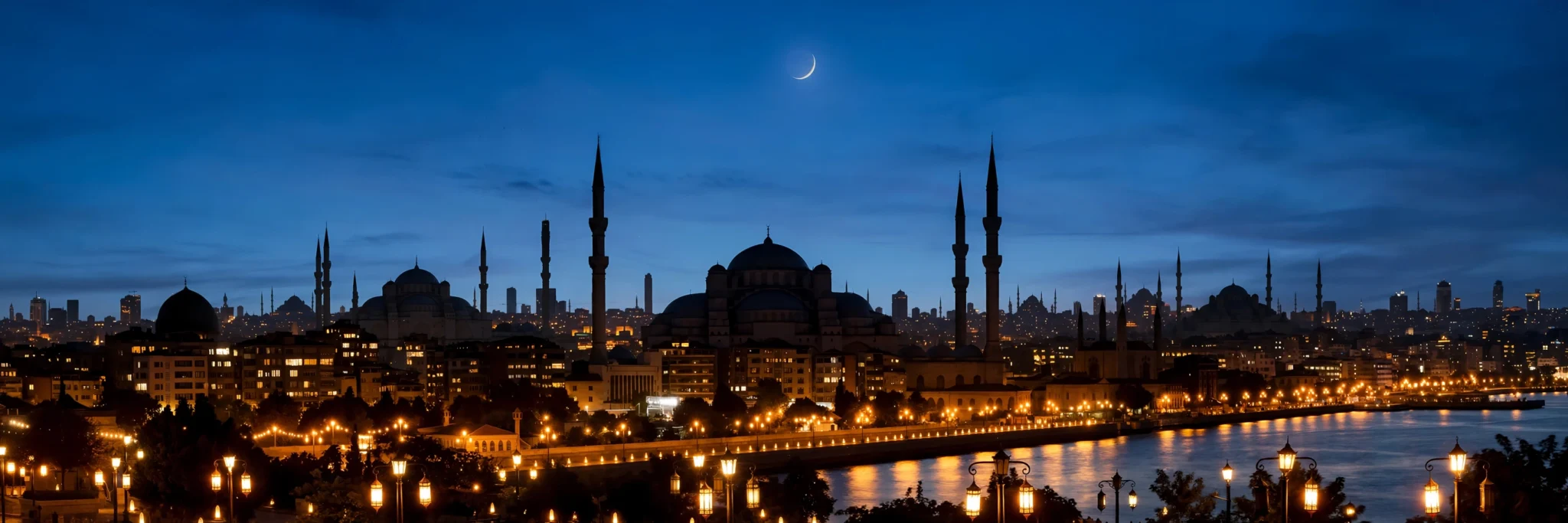
Turkey has around 85 million Muslims, nearly the whole population, and Ramadan there has a sound of its own. Before dawn, drummers called davulcu walk the streets beating their drums to wake people for suhoor, a tradition centuries old.
Two other Turkish traditions are hard to miss. The first is the mahya, lines of lights strung between the minarets of a mosque, spelling out a short message in glowing letters. The second is Ramadan pide, a round flatbread baked only during the month, for which people queue outside bakeries in the late afternoon.
Taraweeh prayers in Turkey are often long, and the mosques of Istanbul draw crowds that spill into the courtyards. The month ends with Seker Bayrami, the sugar festival, when children visit neighbours for sweets.
West Africa and community iftars
West Africa is easy to miss in a list of what countries celebrate Ramadan, and it should not be. Nigeria alone has around 100 million Muslims, roughly half its population, and Senegal, Mali, Niger and Guinea are all Muslim-majority countries.
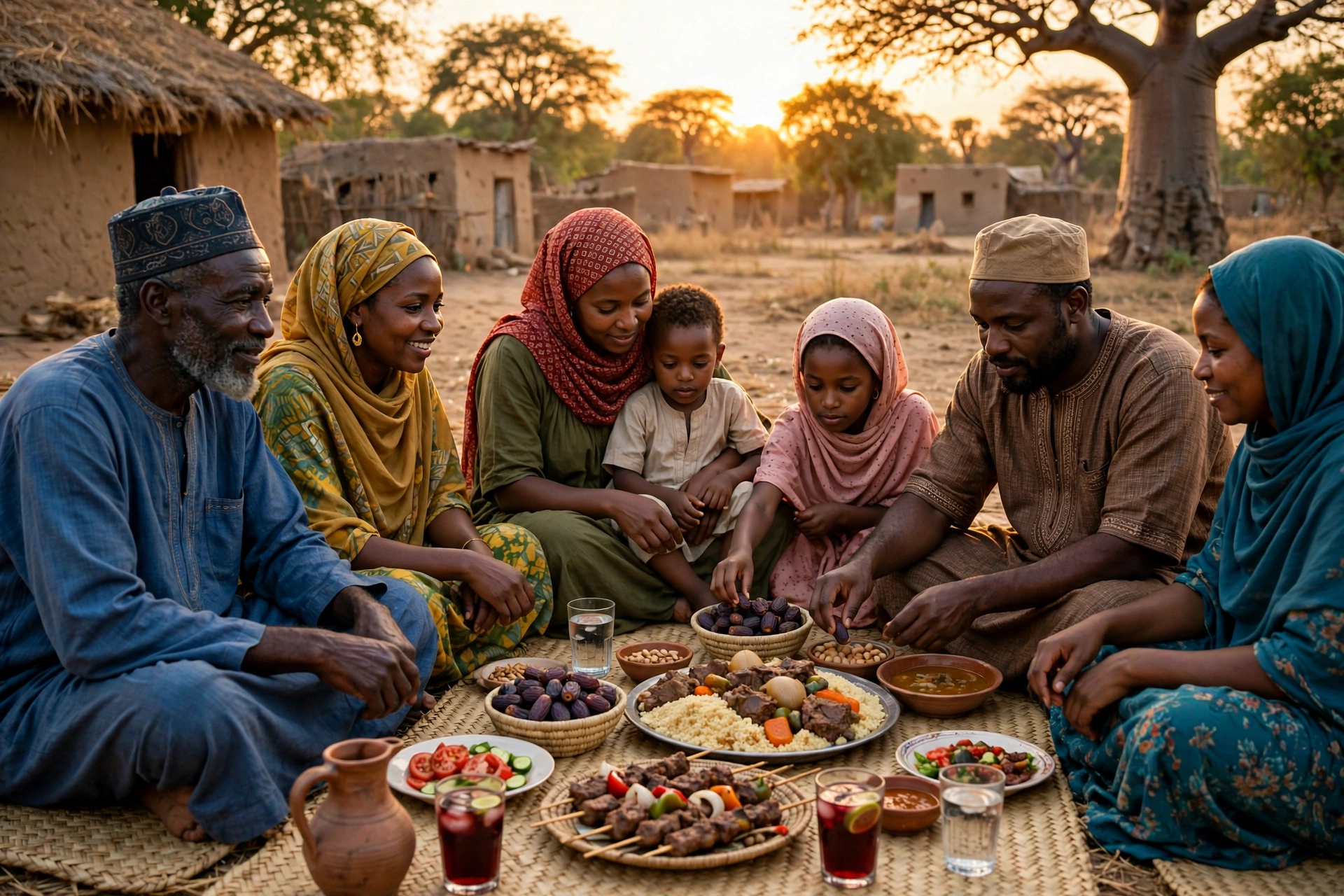
The fast is broken together. In many towns, families eat in the street, on mats laid out in front of their houses, and neighbours share what they have. Dates come first, then millet porridge or rice, cooked in large pots so there is enough for whoever turns up. In Senegal, it is common for a household to prepare more than it needs, so strangers can eat too.
In the Sahel, daytime temperatures in February are high, and the fast runs to around 13 hours. Water at sunset is the first thing anyone reaches for. Radio stations broadcast the call to prayer, and in Nigeria the Sultan of Sokoto announces the start of the month, a moment the whole country watches for.
Ramadan in the United States
About 3.45 million Muslims lived in the United States according to Pew’s 2017 estimate, and more recent counts put the figure nearer 4.5 million. There is no official number, because the US Census does not ask about religion. They are a small share of the population, around 1%, but they live in every state.
The month in the US runs on accommodation. Many schools offer a quiet room at lunchtime for a fasting pupil and excuse them from strenuous sport in the afternoon. Workplaces are used to requests for adjusted hours, and many mosques run open iftars that welcome non-Muslim neighbours. Interfaith iftars are now a normal part of the month in cities like Dearborn, New York and Los Angeles.
Fasting hours in the US in February 2027 will be short, around 11 hours in much of the country, because the month falls in winter. That is a relief after the long summer fasts of the 2010s, when the month fell in June and fasts ran to 16 or 17 hours in the north. The community is spread out, so the mosque matters more: it is where people meet, eat and pray together.
What stays the same everywhere
The details change from Jakarta to Detroit, but the core of the month does not. The fast runs from dawn to sunset, the Quran is read more, the night prayers are longer, and giving rises sharply in the last ten nights. Zakat is often paid in Ramadan even though it is due on its own date, because the reward is believed to be greater in this month.
Eid al-Fitr ends it, and the day looks much the same everywhere: the prayer in the morning, new clothes, visits to family, and gifts for children. The food changes, the language changes, the hours change. The month does not.
That is the answer to what countries celebrate Ramadan: nearly all of them, in their own way, and with the same month at the centre of it.
Ramadan looks different in Jakarta, Cairo and Detroit, but the need it reveals is the same everywhere. We distribute Ramadan rations across several countries, so a family fasting far from you still eats well at sunset.
See Where We Work →Frequently Asked Questions
What countries celebrate Ramadan?
What countries celebrate Ramadan? Nearly every country with a Muslim community, which is almost all of them. The largest Muslim populations are in Indonesia, Pakistan, India, Bangladesh, Nigeria, Egypt and Turkey, and the month is also observed by smaller communities in Europe and North America.
Do non-Muslim countries celebrate Ramadan?
Ramadan is a religious observance, not a national holiday, in most non-Muslim-majority countries. But Muslims in those countries still fast, pray and gather for iftar, and many cities now hold public iftars that welcome neighbours of all faiths.
Which country has the most Muslims?
Indonesia, with about 239 million Muslims according to Pew Research Center estimates for 2020. That is more than Pakistan, India or Bangladesh, and about one in every eight Muslims in the world lives in Indonesia.
Is Ramadan celebrated in the United States?
Yes. Around 3.45 million Muslims lived in the US according to Pew’s 2017 estimate, with more recent counts nearer 4.5 million. Mosques across the country hold nightly prayers and community iftars, and many cities host interfaith iftars during the month.
Do fasting hours differ by country?
Yes, a lot. The fast runs from dawn to sunset, so it is longer in summer and in the far north, and shorter in winter and near the equator. In February 2027, fasts in much of the US and Europe will run around 11 hours, while in Indonesia they run around 13 hours.
Why does Ramadan start on different days in different countries?
Because the month begins with the sighting of the new crescent moon, which is not always visible everywhere on the same evening. Some countries follow a calculated calendar instead, so their start date can differ by a day.
We distribute Ramadan rations across several countries – see where on our About page.