Quick Answer
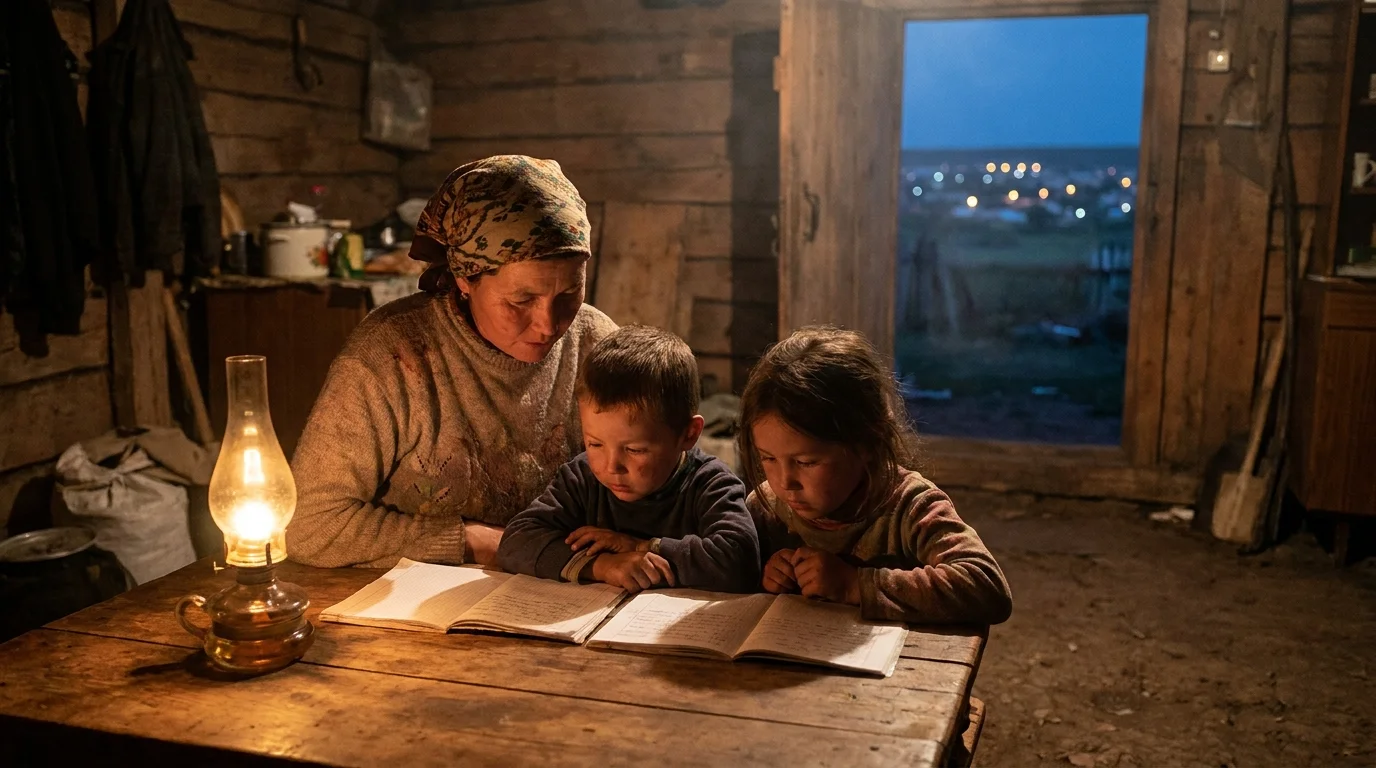
Energy poverty is the lack of access to affordable, reliable, modern energy for lighting, cooking, heating, and cooling. It takes two forms: households with no electricity or clean cooking fuel at all, and households that are connected but cannot afford to use enough energy. About 655 million people live without electricity and around 2 billion lack clean cooking.
The scale splits across those two forms:
- 655 million to 730 million people without electricity access, depending on the source
- Around 2 billion people without clean cooking access
- Millions more in wealthy countries rationing energy they are connected to
This guide explains the definition, the latest global figures, how energy poverty is measured, and what closes the gap.
Table of Contents
What Are the Two Forms of Energy Poverty?
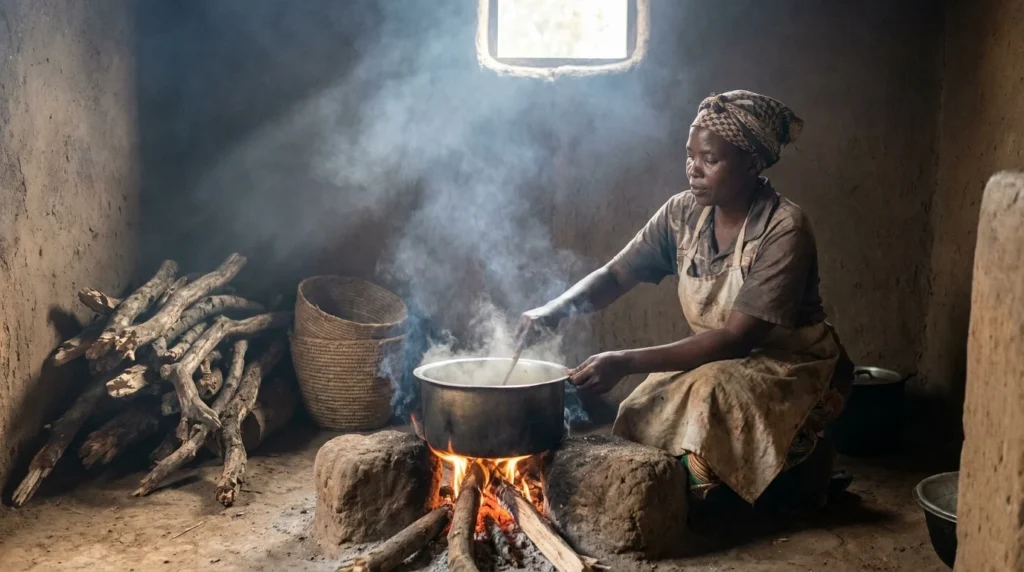
The first form is access poverty, and it dominates low-income countries. Households have no grid connection, or rely on firewood, charcoal, agricultural waste, and animal dung for cooking.
The second form is affordability poverty. It appears in high-income countries and is often called fuel poverty. Households hold a connection but cannot afford sufficient heating, or they divert income from food and medicine to cover energy bills.
Policy responses differ between the two. Infrastructure investment addresses the first. Income support, tariff reform, and building insulation address the second. Both are part of the wider question of how to fix poverty.
Access Poverty: The Global Figures
Tracking SDG 7: The Energy Progress Report 2026 found that 92% of the world’s population has basic electricity access, leaving about 655 million people without it in 2024. The report is produced jointly by the IEA, IRENA, the UN Statistics Division, the World Bank, and WHO.
Clean cooking lags far behind electricity:
- Around 2 billion people lack access to clean cooking
- About half of them live in sub-Saharan Africa, where the number is still rising
- Most of those without access live in rural areas
- About four in five households in sub-Saharan Africa still rely on traditional cooking fuels
Africa carries the largest share of both deficits. Around 600 million Africans lack electricity, and roughly 1 billion lack clean cooking. Many of the same communities also lack access to clean water.
Why Do the Headline Numbers Disagree?
Published figures for people without electricity range from about 655 million to 730 million. The gap reflects methodology, not error.
The World Bank figure reported in Tracking SDG 7 relies mainly on household survey data. The IEA produces its own estimate using administrative data collected from national energy ministries, which puts the figure at around 730 million.
Cite the source alongside the number. A figure quoted without its origin cannot be reconciled against a figure from the other method.
Affordability Poverty in Wealthy Countries
High-income countries measure energy poverty through affordability rather than connection. Three indicator types are in common use:
- Expenditure share. Households spending above a set proportion of income on energy count as energy poor.
- Low income, low energy efficiency. England applies this approach, combining a home energy rating of band D or below with residual income below the poverty line after energy costs.
- Self-reported deprivation. Surveys ask whether households can keep their home adequately warm, or whether they have arrears on utility bills.
Each method produces a different count from the same population, which is why national statistics rarely compare directly across borders.
For families in this position, help with bills and warmth matters most. Darul Infaq’s financial assistance covers essential living expenses, and its Winter Drive provides blankets and winter essentials to families who cannot heat their homes.
What Are the Health Costs of Energy Poverty?
Household air pollution from cooking with solid fuels and kerosene causes around 3 million premature deaths a year, according to WHO. The IEA’s executive director has described the lack of clean cooking access as one of the great injustices in the world today.
The burden falls unevenly within households. Women and girls often spend hours each day collecting firewood and biomass, breathe the smoke directly, and lose school and paid work time to the task. Educational assistance helps keep children from low-income families in school.
Energy costs also squeeze food budgets. Families who must choose between fuel and food rely on support such as fresh meals and monthly groceries.
What Closes the Energy Poverty Gap?
Progress has been substantial but uneven. Since 2000, the number of people without electricity has fallen by almost a billion, and 40 countries have reached near-universal access, according to the IEA.
Current financing figures:
- USD 24.6 billion in international public financial flows to developing countries for clean energy in 2024, up slightly from USD 24.4 billion in 2023
- USD 15 billion a year is the IEA’s estimate of what universal electricity access in Africa requires
- USD 2.2 billion was committed at the 2024 Summit on Clean Cooking in Africa
- About 2% of global clean energy investment reaches Africa, which holds about 20% of the world’s population
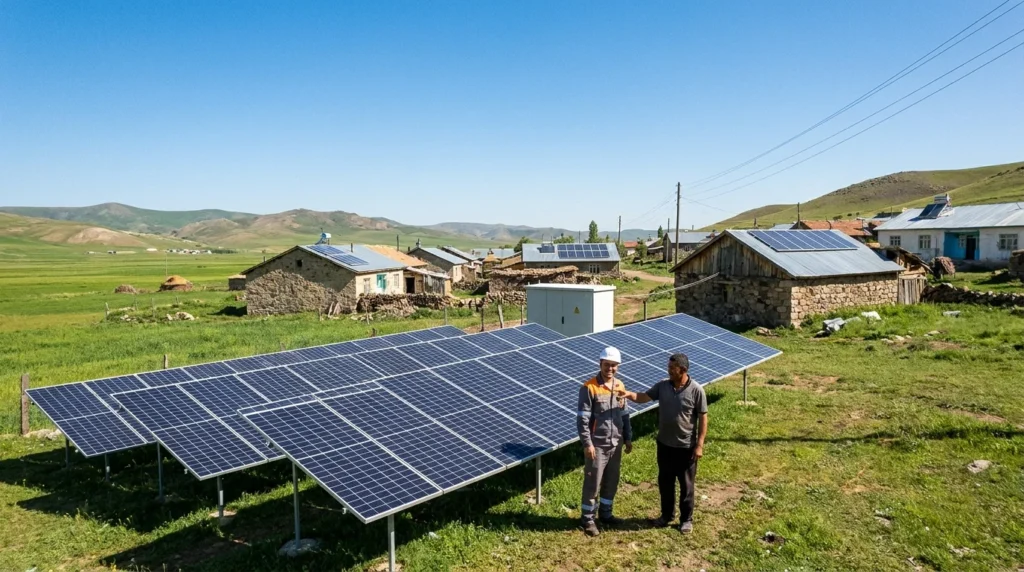
Installed renewable capacity reached a record 544 watts per person worldwide. The gap is wide: 33.6 watts per person in low-income countries against 1,224 in high-income countries. Mini-grids and stand-alone solar systems now carry much of the progress in remote and fragile areas.
At household level, income matters as much as infrastructure. Self-reliance projects help families earn enough to afford energy, and emergency relief supports those hit by sudden shocks.
Will the World Meet the 2030 Target?
Sustainable Development Goal 7 commits to universal access to affordable, reliable, sustainable, and modern energy by 2030. Current trajectories miss it.
On current trends, the IEA projects around 710 million people will still lack electricity in 2030, and 650 million in 2050. Its ACCESS scenario, based on replicating the fastest rates of progress already achieved, reaches universal electricity access by 2035 and universal clean cooking by 2040.
How You Can Help
Energy poverty is one face of a wider problem. Reading more on energy poverty helps, and so does giving. You can donate to Darul Infaq or give your Zakat-ul-Maal to support families with food, warmth, education, and self-reliance.
Calculated your zakat on gold? Pay it where it reaches those who qualify.
Give Your Zakat Now →Frequently Asked Questions
Is energy poverty the same as fuel poverty?
Not exactly. Fuel poverty usually refers to affordability in high-income countries, while energy poverty covers both affordability and complete lack of access. Usage varies between countries and institutions.
Which country has the most people without electricity?
Nigeria, with about 87 million people without electricity in 2024. The Democratic Republic of the Congo (about 85 million) and Ethiopia (about 57 million) follow. Sub-Saharan Africa holds about 86% of the global deficit.
What counts as clean cooking?
Cooking with electricity, LPG, natural gas, biogas, ethanol, or solar counts as clean. Biomass stoves qualify only if they meet WHO emission targets. Firewood, charcoal, kerosene, coal, agricultural waste, and animal dung on basic stoves do not qualify.
Does energy poverty exist in developed countries?
Yes. Households in high-income countries ration heating, build up utility arrears, or cut spending on essentials, despite holding a grid connection.
How is energy poverty measured?
Access measures count connections and cooking fuel type. Affordability measures use expenditure share, energy efficiency combined with residual income, or self-reported inability to heat the home.
What causes energy poverty?
The main causes are low income, high energy prices, missing infrastructure such as grids, and energy-inefficient homes. In low-income countries, lack of investment is the biggest barrier.