Quick Answer
Poverty is caused by a mix of structural, systemic, and individual factors. The six most common root causes are lack of education, unemployment and underemployment, systemic inequality, poor governance and corruption, health costs and medical debt, and conflict and displacement. No single cause works alone. These factors reinforce one another, which is why the deepest poverty usually involves several at once.
About 808 million people, roughly one in ten worldwide, live in extreme poverty on less than $3.00 a day, according to the World Bank’s 2025 estimate. But poverty is not only about income. It shapes access to education, healthcare, housing, clean water, and opportunity.
Understanding what causes poverty matters. Without naming the root causes, solutions stay surface-level. This post breaks down the six most significant drivers of poverty clearly and honestly, without oversimplifying. If you want the other half of the picture, our companion post covers how to fix poverty according to the evidence.
Table of Contents
1. How Does Lack of Education Contribute to Poverty?
Education is one of the strongest predictors of economic mobility. When you lack access to quality schooling, your earning potential narrows sharply.
Children who do not complete basic education are far more likely to stay in low-income cycles. According to UNESCO, about 251 million children and youth were out of school worldwide in 2024. Many come from low-income households that cannot afford school fees, uniforms, or the lost income of a child who is not working.
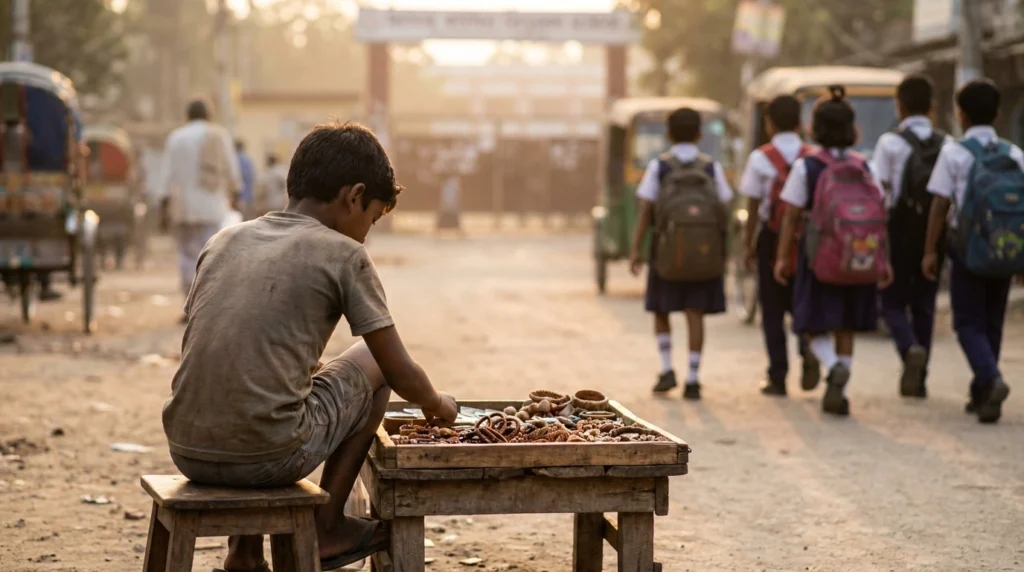
Without foundational literacy and skills, workers are often confined to informal, low-wage labor. The gap widens across generations. That is why educational assistance for children from struggling families is one of the highest-return investments a charity can make.
2. What Role Does Unemployment and Underemployment Play in Poverty?
Unemployment removes income entirely. Underemployment, where people work fewer hours than they need or in roles below their skill level, is an equally serious but less visible driver of poverty.
In developing economies, underemployment is widespread. Workers in informal sectors often have no job security, no benefits, and no path to advancement. A sudden illness or economic shock can wipe out their income overnight.
Even in high-income countries, structural unemployment caused by automation or industry decline leaves workers without viable alternatives. Retraining programs exist, but access is uneven. Helping a family start a small business through self-reliance projects is one proven way to turn dependence into a stable income.
3. How Does Systemic and Structural Inequality Cause Poverty?
Some people face poverty not because of individual choices, but because of the systems around them. Race, gender, geography, and class shape access to wealth-building opportunities in measurable ways.
In the United States, the Federal Reserve’s 2022 Survey of Consumer Finances found that the median white family held about six times the wealth of the median Black family ($285,000 versus $44,900). That gap reflects decades of discriminatory policy in housing, lending, and employment, not personal failing.
Geographic inequality compounds this. Rural communities often lack the infrastructure, investment, and services available in cities. Where you are born significantly shapes what you can access, including something as basic as safe drinking water. Our post on how many people lack access to clean water shows how deep that divide runs.
4. How Do Poor Governance and Corruption Drive Poverty?
When governments fail to function well, public resources do not reach the people who need them most. Corruption diverts funds away from schools, hospitals, and infrastructure, leaving the poorest without essential services.
Transparency International’s Corruption Perceptions Index consistently shows that the countries with the lowest scores, meaning the most perceived corruption, are also among the world’s poorest. This is not a coincidence. Weak institutions fail to enforce property rights, collect taxes fairly, or deliver reliable public services.
Poor governance also discourages private investment. Without a stable rule of law, businesses are less willing to operate, which limits job creation and growth. For donors, this is also why checking a charity’s transparency matters; our guide to choosing the best charity to donate to explains what to look for.
5. How Do Health Issues and Medical Debt Trap People in Poverty?
A single serious illness can push a family into poverty. Medical costs, whether direct fees, lost wages, or long-term disability, are among the leading causes of financial hardship worldwide.
The World Health Organization and World Bank estimate that around 2 billion people face financial hardship because of out-of-pocket health spending. In countries without universal healthcare, one hospitalization can drain savings, force asset sales, or create debt that takes years to repay.
Chronic illness also affects productivity. Workers managing ongoing conditions often earn less, work fewer hours, and face higher rates of job loss. The cycle feeds itself: poverty limits access to healthcare, and poor health deepens poverty. Emergency financial assistance for medical bills exists precisely to stop one illness from becoming a lifetime of debt.
6. How Do Conflict, War, and Displacement Cause Poverty?
Armed conflict destroys the economic and social infrastructure communities depend on. War displaces families, disrupts supply chains, damages schools and hospitals, and wipes out livelihoods, sometimes overnight.
According to UNHCR, the UN Refugee Agency, 123.2 million people were forcibly displaced worldwide at the end of 2024, nearly double the figure from a decade earlier. Refugees and internally displaced people typically lose their assets, their employment, and their access to public services all at once.
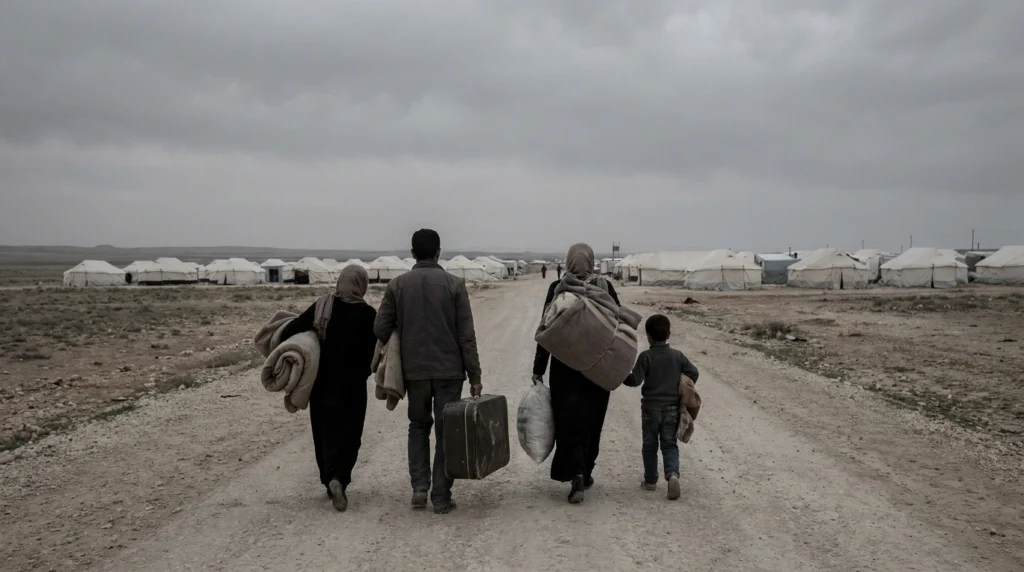
Conflict also has long-term effects. Reconstruction takes years. Trust in institutions erodes. And the psychological toll of trauma, grief, and instability affects productivity and community cohesion for generations. Natural disasters cause similar shocks, which is why emergency relief in the first days after a crisis matters so much.
Poverty Has No Single Cause, and No Simple Fix
The causes of poverty are interconnected. A child who lacks education is more vulnerable to unemployment. A family without healthcare can fall into debt. A community hit by conflict loses education and governance at the same time. Researchers group these drivers into behavioral, structural, and political theories, which the Wikipedia article on the causes of poverty summarizes well.
Addressing poverty means tackling these root causes together, not in isolation. Evidence-based policy that invests in education, healthcare access, anti-corruption measures, and post-conflict recovery has produced measurable results in countries that commit to it.
Understanding these drivers is the first step. The next step is applying that understanding to decisions that shape systems, communities, and lives. Islam frames this as a duty as well as a policy question, which is why the importance of charity in Islam is tied so closely to lifting people out of hardship.
Calculated your zakat on gold? Pay it where it reaches those who qualify.
Give Your Zakat Now →Frequently Asked Questions About the Causes of Poverty
What is the single biggest cause of poverty?
There is no single biggest cause. Poverty results from overlapping factors including lack of education, unemployment, systemic inequality, poor governance, health burdens, and conflict. These causes reinforce one another, and the most severe poverty typically involves several at once.
Is poverty caused by individual choices or systemic factors?
Both can contribute, but research consistently shows that systemic and structural conditions, such as inequality, governance failures, and lack of healthcare access, play a significant role. Individual circumstances exist within systems, and those systems shape which choices are available.
Can poverty be solved?
Poverty has fallen dramatically where policy investment has been sustained. World Bank data shows the share of people in extreme poverty dropped from roughly four in ten in 1990 to about one in ten today. Progress is possible, but it requires coordinated, long-term commitment across governments, institutions, and communities.
How does education reduce poverty?
Education raises earning potential, improves health decisions, and expands economic opportunity. Countries with higher literacy and educational attainment consistently show lower rates of extreme poverty. Access to quality education, particularly for girls and marginalized groups, has one of the highest returns of any development investment.
What is the link between corruption and poverty?
Corruption redirects public money away from essential services like education, healthcare, and infrastructure. It also undermines business investment and economic stability. Countries with high levels of perceived corruption, as measured by Transparency International, consistently experience higher rates of poverty.
How can I help reduce poverty?
Support programs that target root causes: school fees, small-business capital, medical bills, and emergency food. Our post on how you can help needy people lists ten practical ways to start.
Turn Understanding Into Action
Knowing what causes poverty is only useful if it changes what we do next. Darul Infaq Foundation, a US-registered 501(c)(3) charity, works on several of these root causes directly: monthly groceries for families in hardship, orphan support, education fees, and livelihood projects that help families become self-reliant. Support a family today.