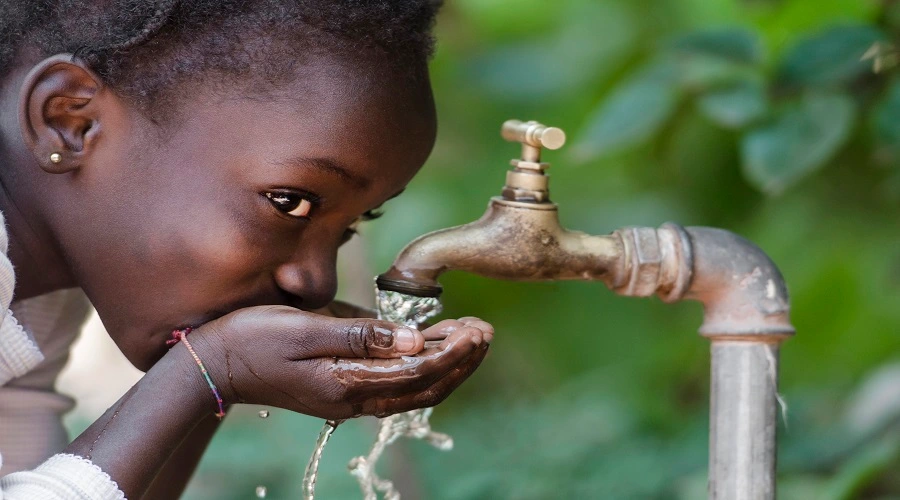
About 2.1 billion people, 1 in 4 worldwide, still lack safely managed drinking water, according to a 2025 report from the World Health Organization (WHO) and the United Nations Children’s Fund (UNICEF). This includes 106 million people who drink directly from untreated surface sources like rivers and ponds.
The number is staggering, but it’s real. One in four people on Earth cannot get clean, safe water at home.
That’s roughly 2.1 billion people. The WHO and UNICEF confirmed this in their 2025 report. The data covers progress from 2000 to 2024.
Below, you’ll learn who lacks access, why it matters, and what’s being done. Let’s break it down.
How many people lack access to clean water in 2025?
The latest figures come from the WHO/UNICEF Joint Monitoring Programme (JMP), which has tracked global water progress for 35 years. Our charity uses these data to better understand needs and measure progress toward improving access to safe water.
Here’s what the 2025 report found:
- 2.1 billion people lack safely managed drinking water. That’s 1 in 4 people globally.
- 106 million people drink directly from untreated surface water, such as lakes and streams.
- 3.4 billion people lack safely managed sanitation, including 354 million who practice open defecation.
- 1.7 billion people lack basic hygiene services at home, including 611 million with no facilities at all.
These numbers show a clear gap. Progress is happening, but billions are still left behind.
What does “safely managed drinking water” actually mean?
Not all water access is equal. The JMP uses specific definitions to measure it.
Safely managed drinking water means water that meets three conditions. It must be on your premises, free from contamination, and available when you need it.
Many people have water that fails one of these tests. They may walk far to fetch it. Or it may be unsafe to drink.
So the real picture is worse than it looks. Having “some” water is not the same as having safe water.
Who is most affected by the global water crisis?
The water crisis does not hit everyone equally. Some groups face far greater barriers.
People in the least developed countries are more than twice as likely to lack basic drinking water. They are more than three times as likely to lack basic hygiene.
In fragile contexts—places facing conflict or instability—the gap widens. Safely managed drinking water coverage there is 38 percentage points lower than elsewhere.
Rural communities also lag behind cities. Rural coverage rose from 50% to 60% between 2015 and 2024. That’s progress, but it’s slow.
Children suffer most. Without clean water, their health, education, and futures are all at risk.
Why do women and girls carry the heaviest burden?
In most countries with data, women and girls collect the water. This responsibility shapes their daily lives.
In sub-Saharan Africa and parts of Asia, many spend more than 30 minutes a day fetching water. That’s time taken from school, work, and rest.
This burden creates a ripple effect. Less time for education means fewer opportunities later in life.
When clean water arrives, girls gain hours back. They can study, work, and thrive.
Can the world fix the clean water crisis by 2030?
The 2030 deadline comes from the United Nations Sustainable Development Goals, or SDGs. These goals call for universal access to safe water by 2030.
Right now, that target is slipping away. The WHO and UNICEF warn that universal coverage of safely managed services appears increasingly out of reach.
Progress is real but too slow. To meet the goals, the world must move faster.
The fix is not a mystery. It requires investment, infrastructure, and a focus on the most marginalized groups.
Why clean water access matters for everyone
Clean water is not a luxury. The WHO calls water, sanitation, and hygiene basic human rights.
When you have safe water, you avoid disease. You stay healthy, attend school, and earn a living. Billions still wait for that chance.
Want to help? Start by learning the facts and sharing them with Darul Infaq. Support trusted organizations like UNICEF and WHO that fund water projects. Awareness drives action—and action saves lives.
Frequently asked questions about clean water access
How many people don’t have clean water in 2025?
About 2.1 billion people, or 1 in 4 worldwide, lack safely managed drinking water, according to the WHO and UNICEF 2025 report.
What is the difference between safe and basic drinking water?
Safely managed water is on your premises, clean, and available when needed. Basic water may require travel or come from a shared, less reliable source.
Which regions have the least access to clean water?
The least developed countries and fragile contexts face the biggest gaps. Rural areas also lag behind cities in safe water coverage.
Why don’t more people have clean water?
Poverty, conflict, weak infrastructure, and rural isolation all play a role. People in fragile settings are hit hardest.
Will the world reach universal clean water access by 2030?
It’s unlikely at the current pace. The WHO and UNICEF say universal safely managed water by 2030 is increasingly out of reach without faster action.
What can you do to help?
Share accurate facts, support organizations like UNICEF and WHO, and back policies that fund water projects in underserved areas.